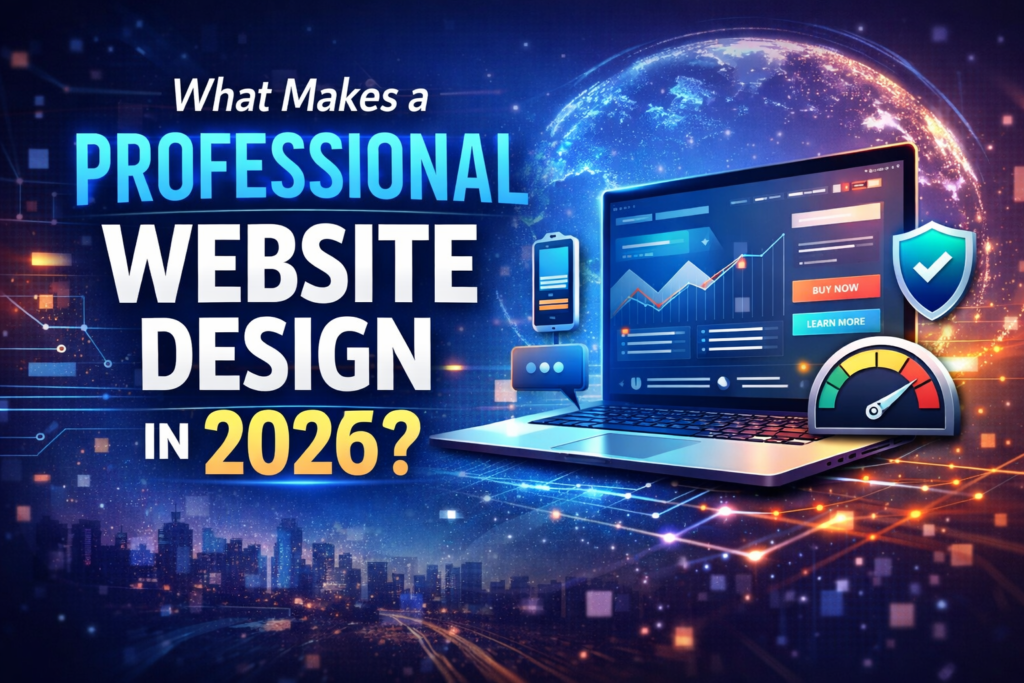
In 2026, a professional website is no longer defined by visuals alone. Businesses today compete in a digital environment shaped by mobile-first users, AI-driven search engines, high user expectations, and shrinking attention spans. A website that looked impressive a few years ago may now feel outdated, slow, or untrustworthy.
Professional website design in 2026 is about performance, usability, scalability, and conversion—not just aesthetics. Whether you are a small business, travel agency, e-commerce brand, or startup, understanding modern website standards is essential before investing in a new website or redesign.
This guide breaks down what truly makes a website “professional” in 2026 and why these elements directly impact your growth.
Strategy-Driven Design (Not Just Visual Design)
A professional website in 2026 starts with strategy, not colors or layouts. Every section of the site must serve a clear business goal—lead generation, bookings, sales, or brand authority.
Professional design answers questions like:
- Who is the target audience?
- What action should visitors take?
- How does the website support the sales funnel?
Without strategy, even the most visually appealing website fails to deliver results.
Mobile-First and Multi-Device Optimization
More than 70% of users now browse primarily on mobile devices. In 2026, mobile-first design is not optional—it is foundational.
- A professional website must:
- Load fast on mobile networks
- Offer thumb-friendly navigation
- Maintain design consistency across devices
- Adapt seamlessly to new screen sizes
Websites that are only “desktop-friendly” are considered outdated and unprofessional.
Speed, Performance, and Core Web Vitals
Website speed directly affects user experience, SEO rankings, and conversions. Google’s Core Web Vitals are now a baseline expectation.
Professional websites in 2026:
- Load within 2–3 seconds
- Use optimized images and modern formats
- Follow clean, lightweight code practices
- Deliver smooth interactions without lag
A slow website signals poor quality and drives users away before they even explore your services.
SEO-Ready Architecture
A professional website is built to be discoverable, not just present online. This means SEO is integrated into the design process, not added later.
- Key SEO-focused design elements include:
- Logical site structure and navigation
- Clean URLs and proper heading hierarchy
- Fast-loading pages
- Mobile and accessibility compliance
Websites that ignore SEO fundamentals struggle to rank, regardless of content quality.
Conversion-Focused User Experience (UX)
In 2026, websites are expected to guide users effortlessly toward action. Professional UX design focuses on clarity, trust, and simplicity.
High-quality UX includes:
Clear calls-to-action (CTAs)
Easy-to-find contact or booking options
Minimal distractions
Strong visual hierarchy
A professional website does not confuse visitors—it leads them.
Trust, Security, and Compliance
Trust is a major conversion factor. Professional websites demonstrate credibility through:
- HTTPS and SSL security
- Transparent contact information
- Privacy policy and legal pages
- Secure payment gateways (for e-commerce)
In industries like travel and e-commerce, security is non-negotiable in 2026.
Scalability and Future-Readiness
A professional website is built to grow with your business. This means:
- Easy content updates
- Modular design systems
- Compatibility with marketing tools, CRMs, and analytics
- Readiness for AI-driven search and personalization
Cheap or poorly built websites often need complete replacement within a year or two.
Brand Consistency and Visual Identity
Design must align with branding. Professional websites maintain:
- Consistent typography and color systems
- Brand-aligned visuals
- Clear messaging and tone
Your website is often the first impression of your business—professional design ensures it reflects credibility and expertise.
Conclusion
Professional website design in 2026 goes far beyond appearance. It is a combination of strategy, performance, user experience, SEO, security, and scalability. Businesses that treat their website as a long-term asset—not a one-time expense—gain a significant competitive advantage.
If your website is slow, outdated, or failing to convert visitors into leads or customers, it may be time to rethink what “professional” truly means. Investing in modern, expert-led website design is no longer optional—it is essential for sustainable business growth.